
Personal observations
Most of the reviews on this site are based on individual retail bags — the format most gardeners buy from a garden centre or online. PAS100 compost is different, and it needs a different approach.
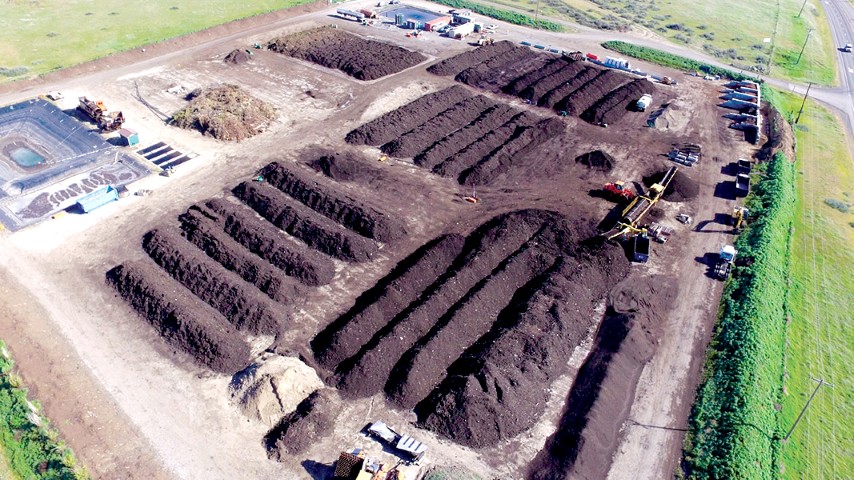
There are over 300 registered sites in the UK operating under the PAS100 certification scheme — the industry standard for composted green waste, and a precursor to full BSI Kitemark status. I have worked alongside my local PAS100 site for over ten years, so I know this sector from the inside rather than just as a customer.
The honest picture is this: any PAS100 facility reprocessing municipal green waste faces structural challenges that no amount of good intention fully resolves. The financial model depends on gate fees — sites are paid by volume received, not by the quality of what they produce. That throughput pressure shapes every downstream decision. Screening grade matters enormously: the difference between finishing compost at 50mm, 25mm, 15mm and 10mm is not cosmetic — it determines whether the end product works in a garden or just looks like it should. Feedstock varies by season — grass-heavy in summer, woody in autumn — and the public’s habit of leaving small plastics in the green waste bin means shredded fragments routinely appear in the finished product. Gardeners who spent twenty years buying reliable peat noticed all of this when the transition happened, and the reputation damage has been real.
The 2026 review cycle tells an interesting story about where the market has moved. The majority of retail MPC is now wood-fibre, highly processed wood fibre, or coir — growing media rather than compost in the traditional sense. But there is also a group of suppliers who appear to have solved the plastic and stone problem, either by controlling inputs more tightly or, more likely, by screening at 10mm rather than 15mm or coarser.
Against that backdrop, I decided to report on PAS100 compost not as individual retail bags — which are not how most people encounter it — but in the format most visible to gardeners: bulk bags of one cubic metre. This is the format used for soil improvement, raised beds, and larger garden projects, and it is where PAS100 compost genuinely earns its place.
One important caveat: every PAS100 site produces a slightly different product. Certification sets a floor, not a ceiling. What follows reflects the material I have handled directly — it should not be read as a verdict on the sector as a whole.
Review summary card
- Product: PAS100 Compost
- Brand / manufacturer: +300 sites in UK
- Type: PAS100-certified compost (soil conditioner)
- Core component: Composted green waste (PAS100)
- Score (Balanced Scorecard): 6.4 / 10
- Best use: Soil conditioning; blending into garden soils
At-a-glance rating breakdown
| Category | Weight | Score |
| Ease of use | 40% | 6.4 |
| Composition & quality | 35% | 6.4 |
| Sustainability | 25% | 6.4 |
| Overall (weighted) | 100% | 6.4 / 10 |
What we liked
- PAS100 compliance provides baseline quality assurance.
- Useful for improving soil organic matter levels.
Points to consider
- Not formulated for container use alone.
- Physical consistency can vary by batch.
Overall impression: PAS100 compost is a compliant, functional soil conditioner best used as part of a blended approach.